
Wait! Before You Go...! 👋
Enjoy 10% OFF Your First Order
A special welcome gift to help you create a beautiful home. Use your exclusive discount code at checkout!
Coupon Code: FIRSTORDER10
 Skip to content
Choosing the perfect bar stool involves more than finding a design that looks beautiful in your kitchen. Height is one of the most important factors to get right. A stool that is too high can leave you feeling cramped beneath the counter, while one that is too low can make eating, working or having a morning coffee uncomfortable.
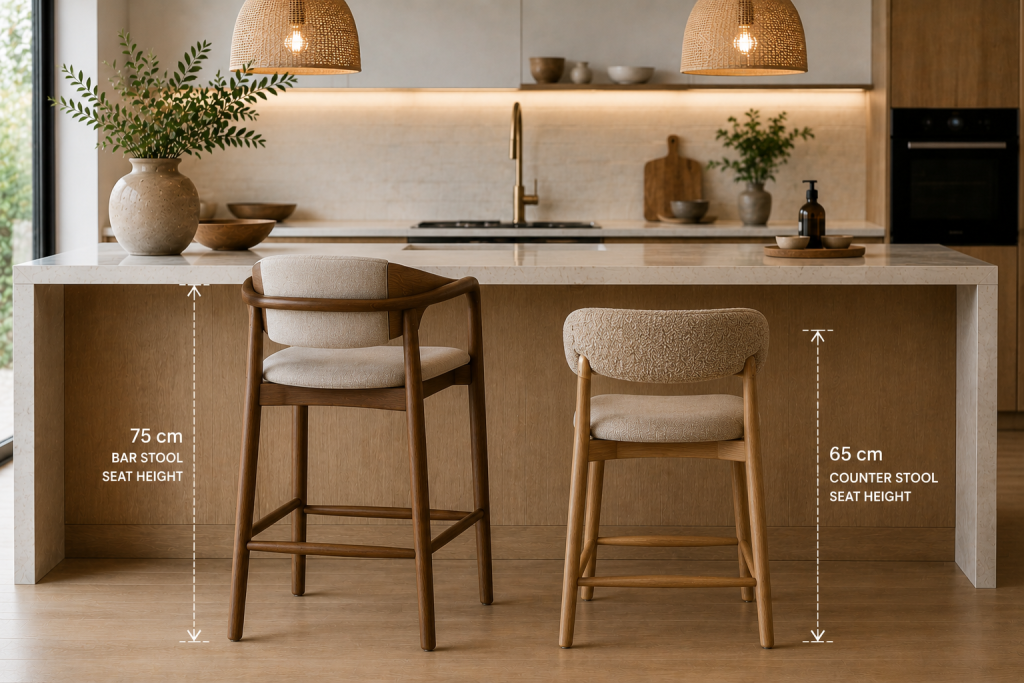
In South African homes, two of the most common seating heights are 65 cm counter stools and 75 cm bar stools. Although the difference is only 10 cm, it makes a significant difference to comfort and how well the stool works with your kitchen counter or bar.
Whether you’re furnishing a new kitchen, upgrading an island or creating an entertainment area, here’s how to choose the right stool height for your space.
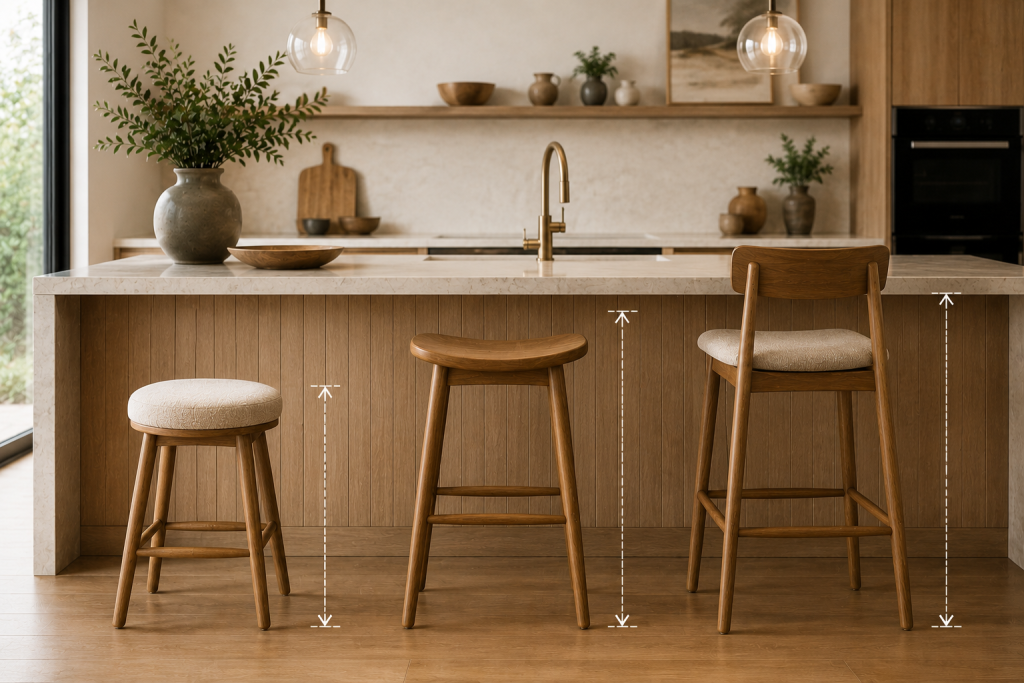
Before choosing your stools, measure the height of your counter from the floor to the top surface of the countertop.
Don’t choose based only on whether a product is called a “bar stool”. Bar stools and counter stools are often grouped together when shopping, but they are designed for different surface heights.
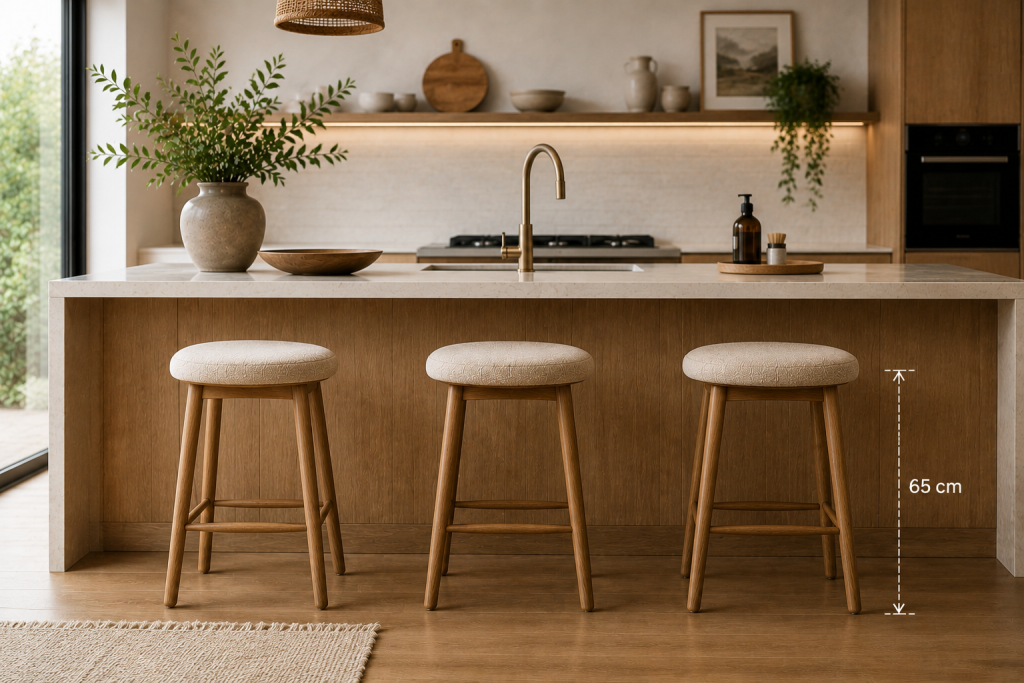
For many standard kitchen counters and islands, a 65 cm seat height is the more suitable option. Taller bar-height surfaces generally work better with a 75 cm seat height.
As a simple guide:
Counter Stool
Bar Stool
Always measure your actual counter before ordering because kitchen designs and countertop thicknesses can differ.
One of the easiest ways to determine whether a stool will be comfortable is to look at the space between the stool seat and the underside of your counter.
Ideally, you want roughly 25–30 cm of clearance.
This provides enough room for your legs while keeping you at a comfortable height for eating or working at the counter.
For example, a kitchen island around 90–95 cm high generally pairs comfortably with a 65 cm counter stool.
A taller bar around 100–105 cm high is generally better suited to a 75 cm bar stool.
However, remember to measure to the underside of the counter or overhang as well. Thick stone countertops, timber aprons and structural supports can reduce the available legroom.
For many contemporary South African kitchens, 65 cm counter stools are an excellent choice.
Modern kitchens increasingly feature large islands that are used for far more than food preparation. They may become breakfast areas in the morning, homework stations in the afternoon and casual entertaining spaces in the evening.
Because these islands are often close to standard kitchen-counter height, a 65 cm seat positions you comfortably without making you feel too high.
Counter stools are available in numerous designs, including:
If your kitchen island is around 90–95 cm high, start by looking at stools with a 65 cm seat height.
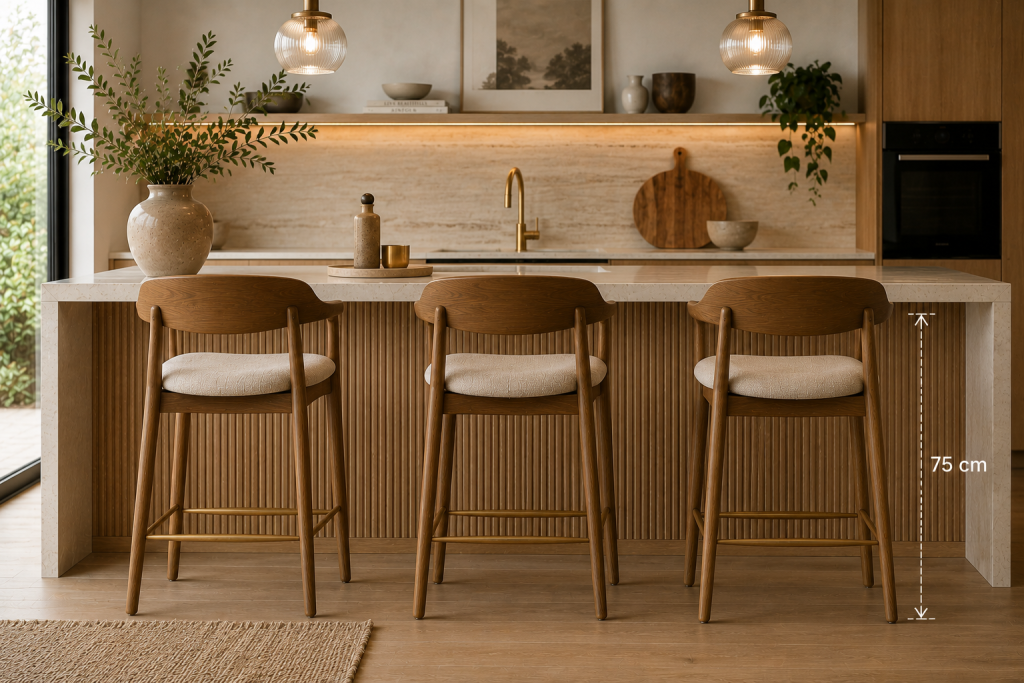
A 75 cm bar stool is approximately 10 cm taller than a standard 65 cm counter stool.
That additional height makes it better suited to taller bar counters and dedicated entertainment areas.
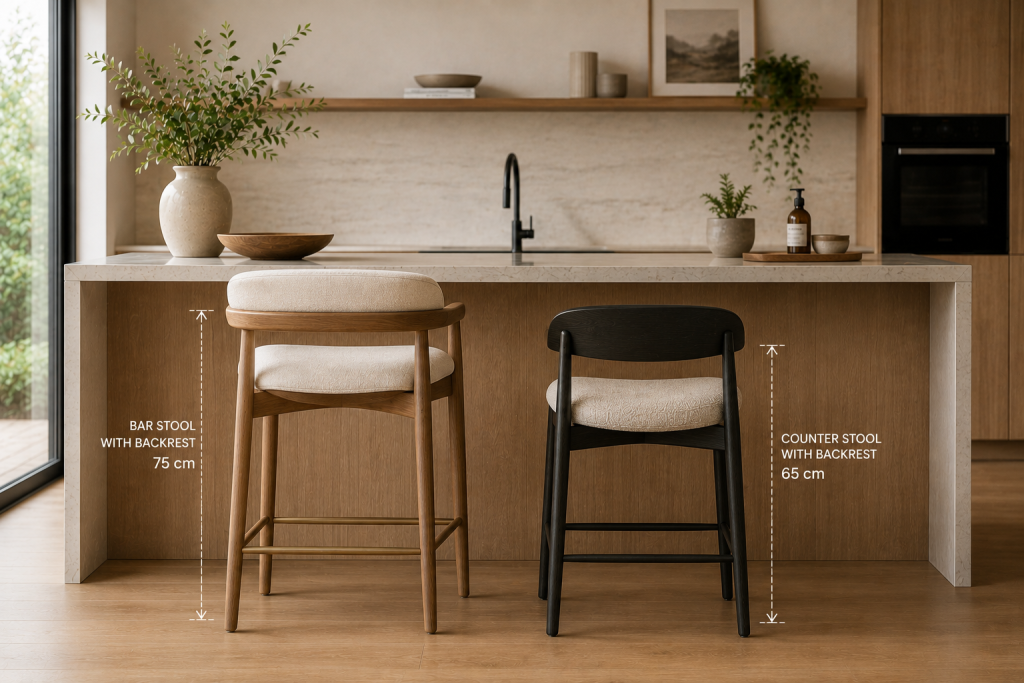
Using a 75 cm bar stool underneath a standard kitchen island can leave too little room between your legs and the countertop. Likewise, using a 65 cm counter stool at a tall bar can leave you sitting noticeably too low.
This is why the names “counter stool” and “bar stool” shouldn’t be used interchangeably.
If your surface is around 100–105 cm high, a 75 cm seat height is generally the better starting point.
Once you’ve established the correct seat height, you can start thinking about the design.
Backless stools are excellent for minimalist kitchens and smaller spaces. They can often slide completely underneath the countertop when they aren’t being used, keeping walkways open and the kitchen looking uncluttered.
They are particularly useful around compact kitchen islands where space is limited.
Stools with backrests, on the other hand, provide additional support and tend to be more comfortable when you’re sitting for longer periods.
If your kitchen island doubles as a dining area, workspace or gathering place, a stool with a supportive backrest may be worth considering.
A beautifully designed timber backrest can also turn a functional stool into an important part of the kitchen’s overall design.
Seat height isn’t the only measurement that influences comfort.
A good footrest is particularly important on taller stools because your feet will usually not reach the floor when you’re seated.
Without somewhere comfortable to rest your feet, even a beautifully upholstered stool can become uncomfortable after a while.
Look for a footrest positioned at a natural height and consider its construction. Timber footrests create a softer, cohesive appearance, while metal footrest plates or rails can provide additional protection in areas that experience frequent use.
This becomes particularly important if your family regularly eats breakfast or dinner at the kitchen island.
Finding the correct height is only half the job. You also need enough space between each stool.
Putting too many stools along an island can make the kitchen look crowded and leave people bumping elbows when seated.
The exact spacing required will depend on the width of each stool, particularly if it has armrests.
Measure your available counter length and compare it with the overall width of the stools, not only the width of the seat.
Remember that stools with arms and wide curved backrests usually require more room than simple backless designs.
Fewer properly spaced stools will almost always look better—and feel more comfortable—than squeezing an extra stool into the space.
Another important measurement is the depth of your countertop overhang.
The overhang is the section of countertop extending beyond the cabinetry or island base. This creates the space where your knees and legs sit.
Even with the perfect stool height, an island with very little overhang may be uncomfortable because there isn’t enough space for your knees.
When planning a new kitchen, consider stool seating from the beginning rather than treating it as an afterthought.
If your kitchen is already complete, measure the available legroom before selecting stools, particularly if you’re considering a deeper seat or a stool with a substantial backrest.
Once the measurements are correct, you can focus on materials and finishes.
Timber stools are particularly versatile and work beautifully in contemporary South African kitchens. Oak, ash, walnut and other timber finishes can bring warmth to kitchens dominated by stone, tiles and cabinetry.
For additional comfort, consider an upholstered seat.
Neutral fabrics such as cream, beige, oatmeal, taupe and textured weaves create a softer look, while leather in tan, caramel, cognac, chocolate or black can introduce a richer character.
Rattan and woven detailing can work beautifully in relaxed contemporary and coastal-inspired interiors.
You also don’t need to match your stools perfectly to your cabinetry. A little contrast can make them stand out as a deliberate design feature.
The best stool for a home where people sit for five minutes while having coffee may be very different from the best stool for a family that eats dinner at the kitchen island every evening.
For occasional seating, a simple backless 65 cm timber counter stool may be all you need.
For longer periods of sitting, consider:
A supportive backrest for additional comfort.
An upholstered seat to provide cushioning.
A well-positioned footrest to support your feet.
A wider seat if you have enough room around the island.
Armrests if space allows and you want a more chair-like seating experience.
Think about your everyday routine before prioritising appearance alone.
Adjustable stools can be useful when a counter has an unusual height or when different people require different seating positions.
However, fixed-height stools often provide a cleaner furniture-style appearance and can feel more integrated into a carefully designed kitchen.
If you already know your counter height, choosing the correct 65 cm or 75 cm fixed-height stool removes much of the guesswork.
The most important consideration remains the relationship between the seat height and the counter height.
It is easy to fall in love with the appearance of a stool first, particularly when you’re choosing between beautiful timber, fabric, leather and rattan designs.
But always check the dimensions before purchasing.
A stool can have the perfect timber finish and upholstery for your kitchen, but if the seat is 10 cm too high or too low, you’ll notice it every time you use it.
Use this simple South African reference when shopping:
| Stool Type | Seat Height | Suitable Surface Height |
|---|---|---|
| Counter Stool | 65 cm | 90–95 cm |
| Bar Stool | 75 cm | 100–105 cm |
Then check that you will have around 25–30 cm of comfortable clearance between the seat and the underside of the counter.
The right bar or counter stool should feel as though it was designed specifically for your kitchen.
Start with the measurements. Determine whether you need a 65 cm counter stool or a 75 cm bar stool, check the available legroom and countertop overhang, and calculate how many stools will comfortably fit along the counter.
Once those practical details are correct, you can focus on the enjoyable part—choosing the design.
Whether you prefer a minimalist backless timber stool, a luxurious upholstered design, natural rattan detailing or a statement stool with a supportive backrest, the right combination of height, comfort, proportion and materials can transform an ordinary kitchen island into one of the most inviting areas of your home.
At Woodbuilt Furniture, we believe furniture should be selected for the way South African homes are actually lived in. A well-designed stool shouldn’t simply look beautiful beside your kitchen counter—it should provide the right height, lasting comfort and a design you’ll enjoy using every day.
 Optimized by Seraphinite Accelerator