

Wait! Don’t Go Yet! 👋
We see you eyeing those adorable outfits! 😍 Before you leave, here’s 10% OFF your first order!
Hurry, your little one’s next favorite outfit is waiting! 🛍️✨
Mixing different wood tones is one of the easiest ways to make a home feel warm, layered and thoughtfully designed. Gone are the days when your dining table, chairs, coffee table, sideboard and bedroom furniture all needed to be exactly the same colour. In fact, using only one wood finish throughout a room can sometimes make an interior feel flat or overly coordinated.
The secret is not to make every timber piece match. Instead, the goal is to make the different tones feel connected. Light oak can sit beautifully beside walnut, darker timber can add contrast to natural wood, and woven materials such as rattan can introduce another layer without making the room feel overwhelming.
For South African homes, where open-plan living and natural materials are especially popular, learning how to mix wood tones can completely transform an interior. Here is how to do it successfully.
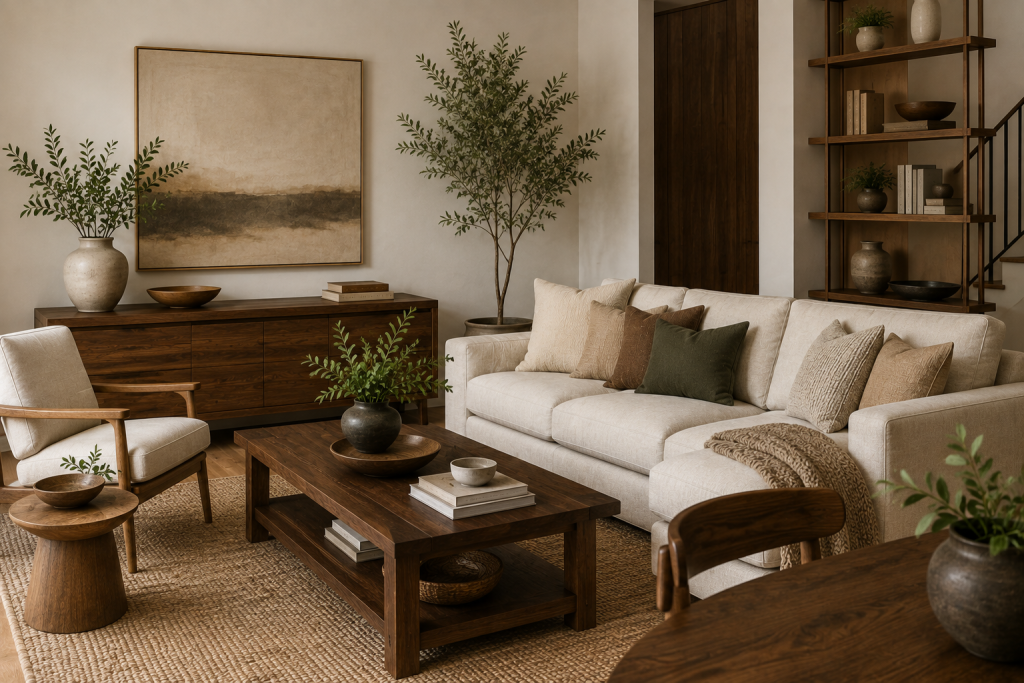
Before introducing several different finishes, choose one wood tone to become the foundation of the room.
Your dominant tone will usually come from the largest wooden surface in the space. This could be your flooring, dining table, kitchen cabinetry, entertainment unit, bed frame or another substantial piece of furniture.
For example, if your home has warm natural oak flooring, allow that warm timber colour to become the starting point. You can then introduce darker walnut furniture or lighter natural pieces around it.
The important thing is that one tone remains visually dominant.
Without a dominant finish, several equally strong wood colours can compete for attention and make the room look unnecessarily busy.
Think of your dominant timber as the anchor and the other finishes as supporting elements.
Not all brown wood finishes are the same.
Some woods have warm undertones of honey, caramel, red or golden brown, while others have cooler grey, ash or neutral undertones.
You don’t necessarily need every wood tone to have exactly the same undertone, but understanding them makes mixing much easier.
Warm oak, walnut, cognac-toned timber and natural rattan often complement one another because they share an earthy warmth. Similarly, pale ash and cooler washed timber finishes can work beautifully together in lighter contemporary interiors.
If you want to introduce contrast, do it deliberately.
For example, a warm oak dining table with black timber dining chairs can look striking because the contrast is obvious and intentional. Trying to combine several very similar—but slightly mismatched—brown finishes can sometimes look less considered.
One of the biggest mistakes when decorating with timber is trying to find a second piece that almost matches something you already own.
If the colours are close but noticeably different, the result can look accidental.
Instead, embrace contrast.
A light oak dining table can look beautiful with darker walnut or black dining chairs. A dark coffee table can create definition in front of a light cream sofa and lighter timber flooring. A walnut sideboard can introduce depth into a bedroom containing lighter timber bedside tables.
When the difference between the woods is clear, the combination usually feels intentional.
This also gives you much more freedom when adding furniture to your home over time. You don’t have to search endlessly for exactly the same finish.
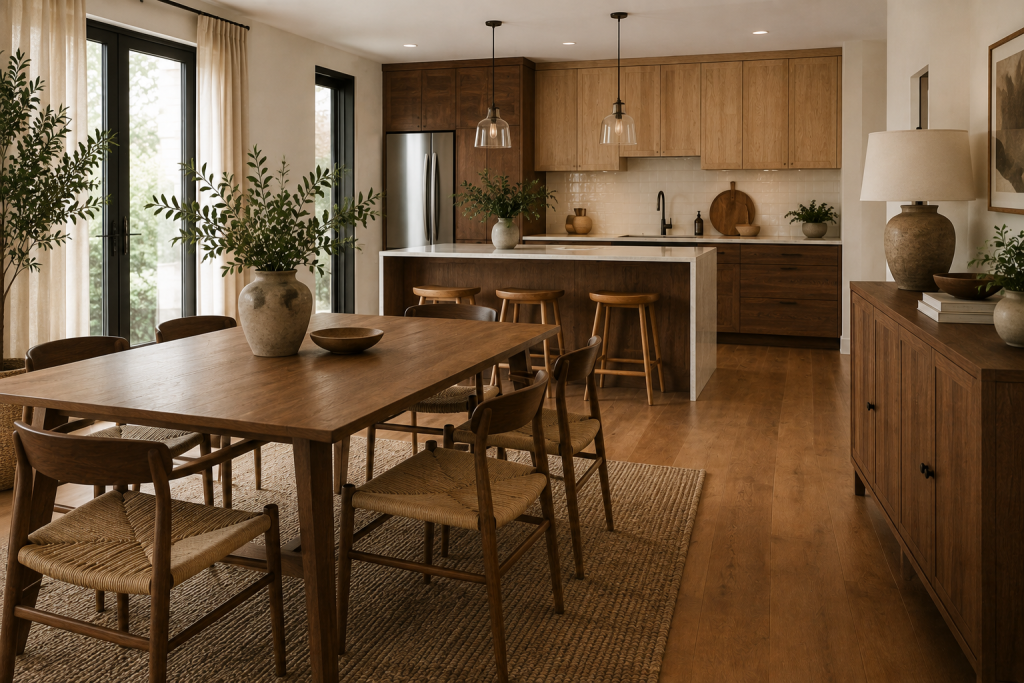
Repetition is one of the most effective ways to make mixed timber finishes feel connected.
If you introduce a darker wood coffee table into your living room, try repeating a similar tone elsewhere through an occasional chair, picture frame, shelving unit or sideboard.
The pieces do not have to be identical.
Similarly, if your dining area contains light oak chairs, you could repeat that lighter wood through bar stools in an adjoining kitchen.
This technique is particularly useful in open-plan South African homes, where the kitchen, dining room and living room may all be visible at the same time.
Repeating tones across the different areas creates a visual connection and allows the entire open-plan space to feel cohesive.
If nearly everything in a room is timber, even beautifully coordinated wood tones can begin to feel heavy.
This is where upholstery and softer materials become important.
Introduce fabric, leather, bouclé, linen-inspired textiles, rugs, curtains, cushions and throws between wooden pieces.
Imagine a living room containing timber flooring, a walnut coffee table and wooden occasional chairs. Adding a large cream fabric sofa and textured rug creates visual breathing room between those timber surfaces.
The same principle applies to a dining room.
Instead of combining a wooden table with six completely wooden chairs, consider fabric or leather upholstered chairs with timber legs. The upholstery separates the wood finishes and adds another texture to the room.
Rattan and woven materials can also act as a bridge between different timber tones because their natural appearance works beautifully alongside wood.
A neutral colour palette makes mixing wood considerably easier.
Cream, ivory, oatmeal, beige, sand, taupe, stone and warm grey provide a quiet backdrop against which different timber finishes can stand out without competing with one another.
This does not mean your home needs to be completely beige.
You can introduce earthy accent colours such as olive green, terracotta, rust, caramel, charcoal or chocolate brown through cushions, artwork and decorative accessories.
The objective is simply to avoid having too many competing colours and too many competing timber finishes at the same time.
If the wood is providing much of the warmth and character in the room, allow the surrounding colours to support it.
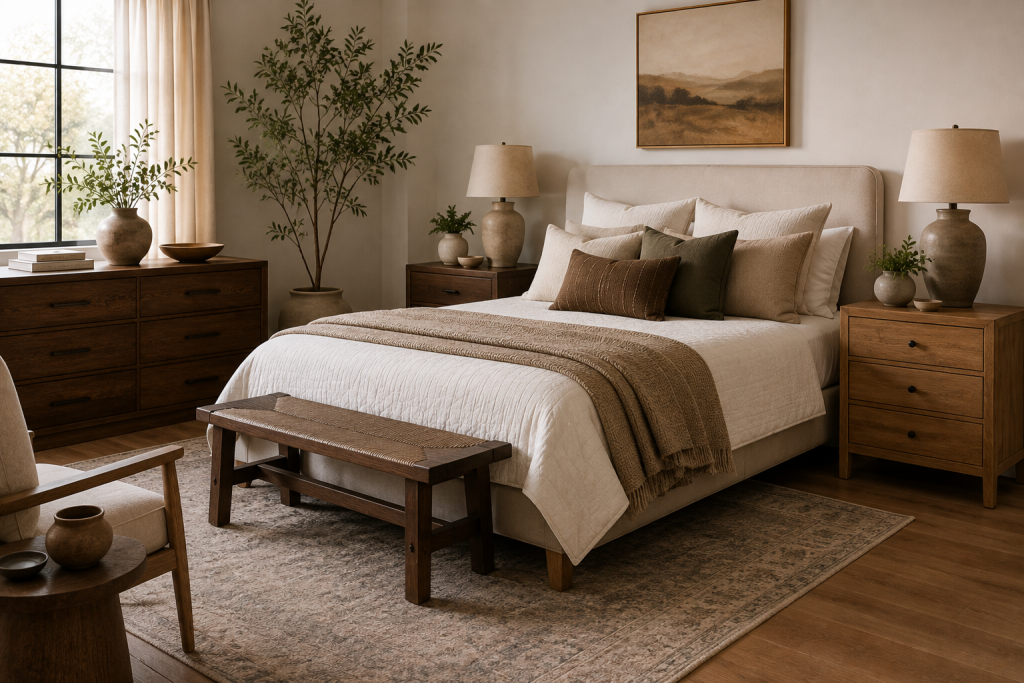
Wooden flooring is effectively another wood tone, and because it covers such a large surface area, it should never be forgotten when choosing furniture.
Your furniture does not need to match your floor.
In many cases, some contrast is actually preferable.
If you have very light wooden flooring, a medium or darker dining table can give the room definition. If your flooring is dark, lighter timber furniture can prevent the space from becoming visually heavy.
A rug is another useful design tool.
Placing a large rug beneath a timber dining table or coffee table creates separation between the furniture and wooden floor. This allows two different wood tones to sit together without visually blending into one large block of brown.
Timber becomes even more beautiful when it is combined with other natural-looking materials.
Stone, marble, ceramics, rattan, woven fibres, leather and textured fabrics can all help create a layered interior.
For example, instead of having a wooden coffee table, wooden side tables and a wooden console all together, you might introduce a stone-top side table or ceramic lamp.
The result still feels warm and natural, but there is more visual variety.
This style works particularly well in contemporary South African interiors, where natural textures, earthy colours and indoor-outdoor influences can be incorporated beautifully.
Mixing wood successfully doesn’t mean introducing every finish you like.
For most rooms, two or three main wood tones are enough.
You might have:
Those three tones can provide plenty of variation without making the interior feel chaotic.
If you have an open-plan home, you can carry those same finishes from one area into another.
Your dining table might introduce the walnut, your kitchen stools could repeat the light oak, and your living-room coffee table could bring walnut back into the space.
The repetition creates rhythm.
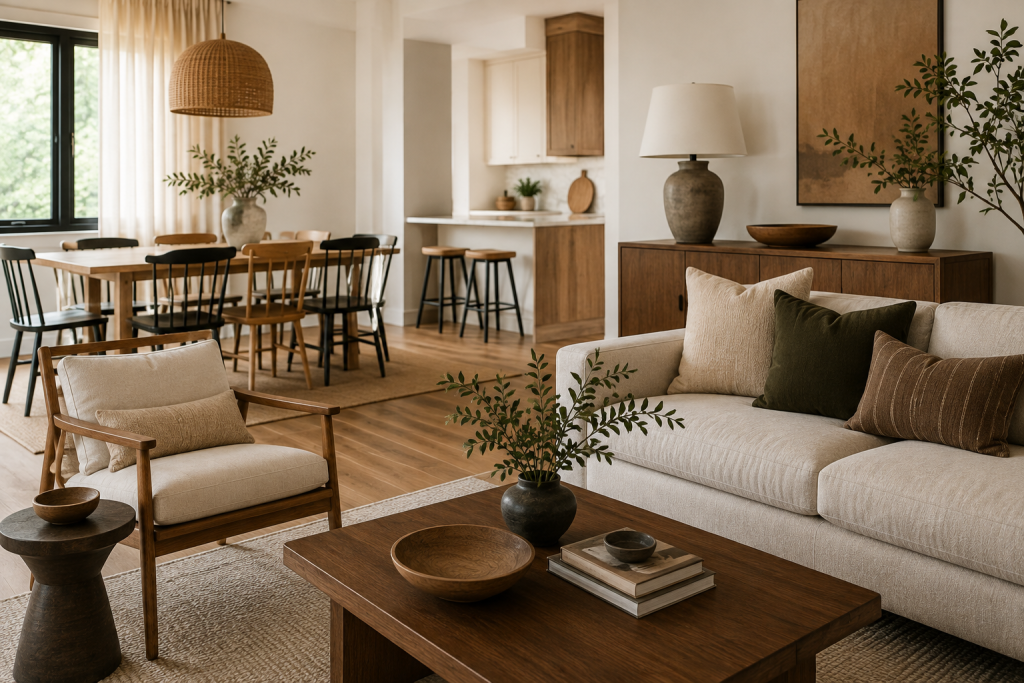
Wood colours can vary while the furniture still shares a common design language.
For example, you could combine a light oak dining table with walnut dining chairs if both have clean, contemporary lines.
Similarly, a darker timber coffee table can work beside lighter wooden occasional chairs when both pieces have simple shapes and similar proportions.
When every item has a completely different colour, shape, era and design style, the room can begin to feel busy.
Choose one overall direction—such as contemporary, Scandinavian, organic modern, minimalist or relaxed coastal—and allow the individual pieces to vary within that style.
The same principles work beautifully in bedrooms.
Your bedside tables do not necessarily have to match your dresser, and neither needs to be identical to a timber bench at the end of your bed.
Start with your largest elements and then layer in complementary tones.
A cream upholstered bed, for example, creates an excellent neutral centrepiece. You could then use medium oak bedside tables, a darker timber dresser and a wooden bench.
Soft bedding, a large rug, ceramic lamps and neutral curtains provide separation between the different woods and keep the room calm.
The result feels collected and personal rather than like every piece was purchased as part of one matching bedroom suite.
Open-plan kitchens and dining areas are another place where homeowners often worry about matching timber.
Your kitchen cabinets, island stools, dining table and dining chairs do not all need to be the same wood.
If your kitchen cabinetry is dark walnut, for example, a medium natural oak dining table can brighten the dining area. You could then repeat the darker cabinetry tone through selected dining chairs, a sideboard or smaller accessories.
Alternatively, light timber kitchen cabinetry can be balanced with a darker dining table to create contrast.
The key is repetition. Carry at least one wood tone from the kitchen into the dining area so the two spaces feel related.
The living room gives you plenty of opportunities to combine wood naturally.
Coffee tables, side tables, occasional chairs, consoles, shelving and flooring can all introduce different finishes.
Instead of matching everything, choose a dominant wood and repeat your secondary finish in two or three places.
Then introduce plenty of neutral upholstery.
A cream or beige sofa can act as a visual break between a dark walnut coffee table and lighter oak occasional chairs. Add a natural woven rug, greenery and a few ceramic accessories, and suddenly the different wood finishes feel connected rather than competitive.
A beautifully designed home should not look as though every piece of furniture came from the same collection.
Mixing wood tones gives your interior depth, warmth and personality. It also allows you to add new furniture over time without worrying about finding an exact match for pieces you already own.
Start with one dominant wood tone, introduce one or two complementary finishes, repeat those colours throughout the space and use neutral fabrics and natural textures to create breathing room.
Most importantly, don’t be afraid of contrast.
Light and dark woods can sit beautifully together when the combination is deliberate and repeated throughout the room.
At Woodbuilt Furniture, we believe your home should feel collected, comfortable and uniquely yours. By combining thoughtfully selected timber furniture with upholstery, natural textures and complementary finishes, you can create a home that feels layered and sophisticated—without ever looking too busy.

