
Wait! Before You Go...! 👋
Enjoy 10% OFF Your First Order
A special welcome gift to help you create a beautiful home. Use your exclusive discount code at checkout!
Coupon Code: FIRSTORDER10
 Skip to content
When shopping for furniture, you will often come across two terms: solid wood and engineered wood. At first glance, furniture made from either material can look remarkably similar, particularly when engineered wood is finished with a natural timber veneer. However, what sits beneath the surface can be very different.
Understanding these differences can help you make a more informed decision when choosing a dining table, bed, sideboard, dining chair, coffee table or other furniture for your home.
Neither material should automatically be considered the right choice for every situation. Solid wood is valued for its natural character, repairability and long-term potential, while engineered wood can offer excellent stability, consistency and affordability when appropriately manufactured.
At Woodbuilt Furniture, we believe customers should understand the materials used in furniture and how those materials affect appearance, maintenance, performance and value.
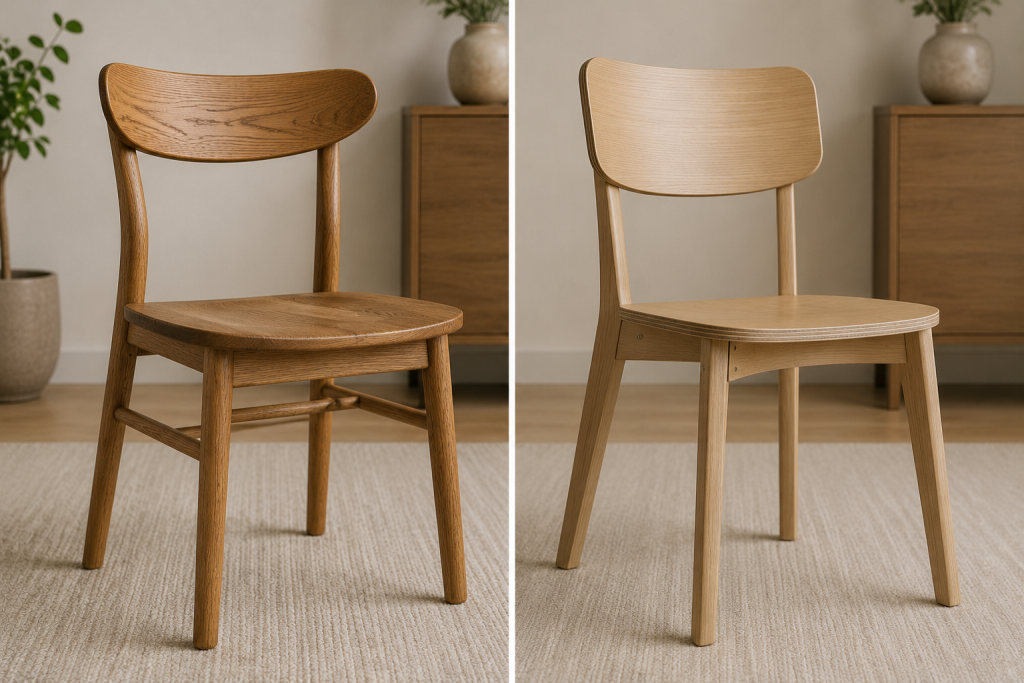
Solid wood furniture is made primarily from pieces of natural timber rather than boards manufactured from compressed wood fibres or particles.
Depending on the furniture and construction method, several pieces of solid timber may be joined together to create a tabletop, bed frame, chair or cabinet. Therefore, “solid wood” does not necessarily mean that an entire table is carved from one single piece of a tree.
Common furniture timbers can include oak, ash, walnut, pine and other hardwoods or softwoods.
One of the defining characteristics of solid wood is its natural variation. Every piece of timber develops differently as a tree grows, which means variations in grain, knots, markings and colour are normal.
These characteristics are not necessarily imperfections. They are part of what gives natural timber its individual appearance.
Two solid oak dining tables made to the same design, for example, may have slightly different grain patterns and colour variations.
That uniqueness is one of the reasons many homeowners are drawn to solid timber furniture.
Engineered wood is a broad category of manufactured wood-based products.
Instead of using solid pieces of timber throughout, wood fibres, particles or thin layers of timber may be combined using adhesives and manufacturing processes to create boards or panels.
Common examples include:
MDF (Medium-Density Fibreboard) – produced from refined wood fibres combined with binders and compressed into smooth panels.
Particleboard or chipboard – manufactured from wood particles that are bonded and pressed together.
Plywood – constructed from multiple thin layers of wood veneer arranged and bonded together.
Engineered boards can then be covered with finishes such as natural timber veneer, laminate or decorative surfaces.
A high-quality timber veneer, for example, can give engineered furniture the appearance and feel of real wood at the surface because the veneer itself is a thin layer of genuine timber.
It is therefore important not to assume that all engineered wood furniture is the same. Quality varies significantly depending on the core material, thickness, construction and finish.
One of the most noticeable differences between solid and engineered wood is appearance.
Solid timber naturally contains variations.
You may see changes in:
These variations make every piece slightly different.
For homeowners who appreciate natural materials, these characteristics can be part of the attraction.
Engineered wood can provide a much more uniform appearance, particularly when finished with laminate or a consistently selected veneer.
This can be useful when you want several furniture pieces to have a closely coordinated finish.
The choice therefore comes down partly to preference: natural individuality or greater visual consistency.
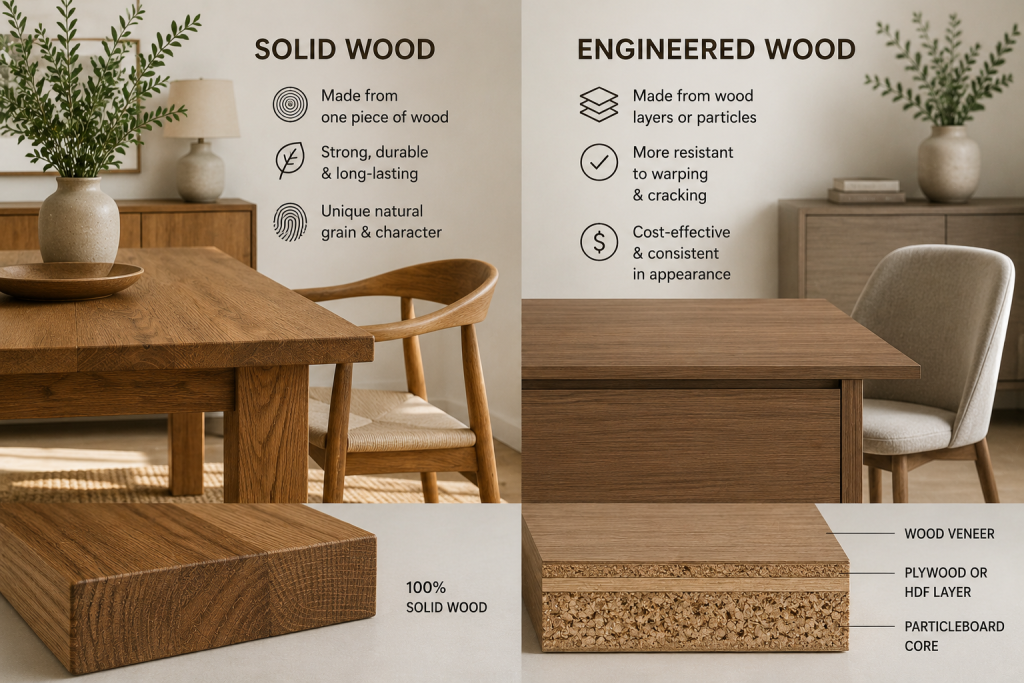
Well-constructed solid wood furniture has excellent long-term potential.
Because the material extends through the furniture component rather than being limited to a decorative surface layer, many solid timber pieces can tolerate years of everyday use.
Certain scratches, marks and surface wear may also be repairable through sanding and refinishing, depending on the finish and construction.
Engineered wood can also be durable, but its performance depends considerably on what type of engineered material has been used.
Quality plywood, for example, behaves very differently from inexpensive particleboard.
Construction quality matters just as much as the material itself.
For this reason, furniture should never be judged solely by whether its description says “solid” or “engineered”. Joinery, hardware, board thickness, structural design and intended use all contribute to durability.
One advantage of certain engineered wood products is dimensional stability.
Natural timber responds to its surrounding environment. Changes in humidity and temperature can cause wood to expand and contract.
This movement is natural.
Furniture manufacturers therefore need to account for timber movement when designing and constructing solid wood pieces.
Some engineered materials are designed to reduce this degree of movement, which can make them particularly useful for large flat surfaces, cabinetry and certain furniture components.
This is one reason you may sometimes find furniture combining solid timber frames with engineered panels.
Rather than automatically indicating lower quality, using different materials strategically can sometimes improve the performance of a piece.
Solid timber furniture can be relatively heavy, although the exact weight depends on the wood species and construction.
A substantial solid timber dining table or sideboard may require more than one person to move safely.
Engineered wood furniture can sometimes be lighter, although this isn’t guaranteed. MDF, for example, can actually be surprisingly heavy.
If you move frequently or regularly rearrange your furniture, weight may be worth considering alongside durability and appearance.
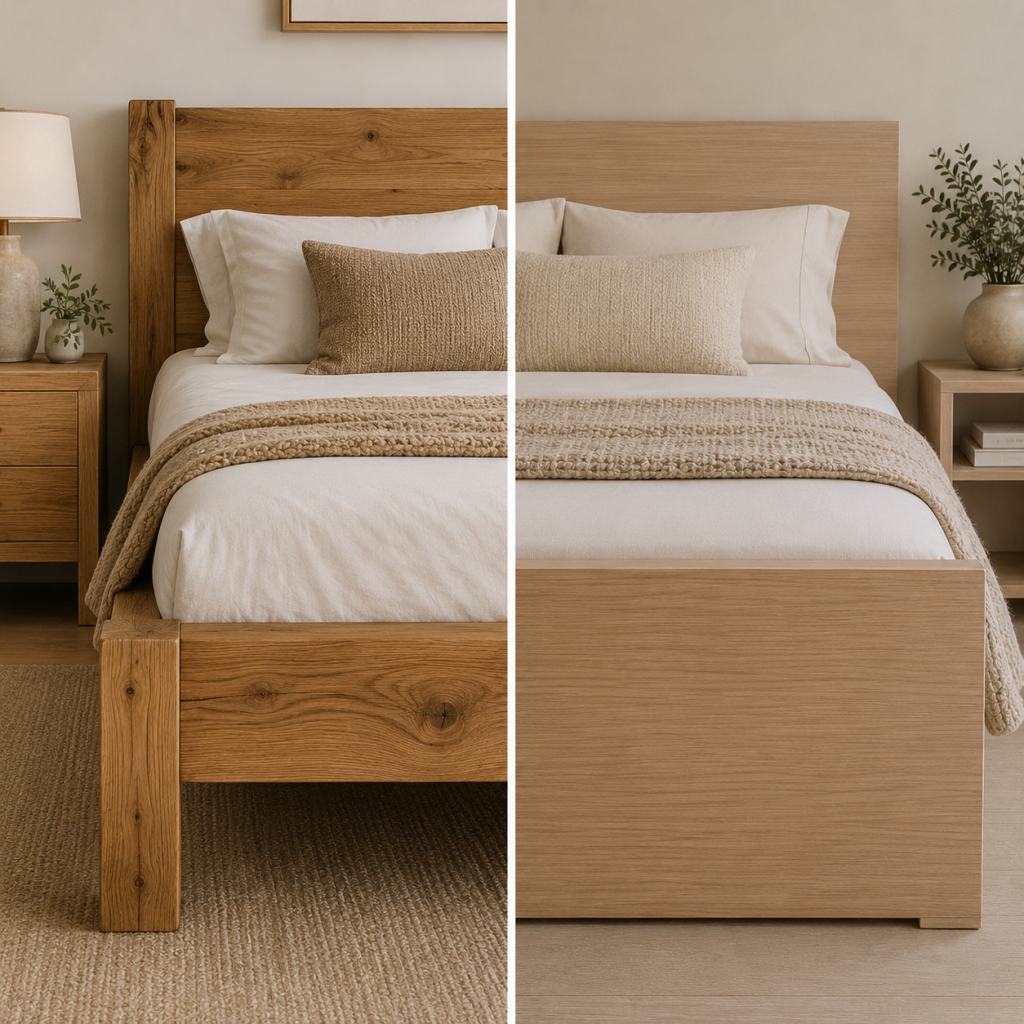
Repairability is one area where solid timber can have an advantage.
Because natural wood continues beneath the surface, certain scratches, dents and signs of wear may be sanded and refinished.
A well-made solid timber dining table can therefore develop character over many years and potentially be restored when necessary.
Engineered furniture requires a different approach.
If the piece has a thin veneer, aggressive sanding could pass through the veneer and expose the material underneath. Laminate surfaces also cannot generally be refinished in the same way as solid timber.
Minor damage may still be repairable, but the available options depend heavily on the particular material and surface finish.
Neither solid nor engineered wood should be treated as waterproof unless a manufacturer specifically states otherwise.
Water left sitting on furniture can damage finishes and, depending on the material, potentially affect the underlying structure.
Solid wood may swell, stain or change shape when repeatedly exposed to excessive moisture.
Some engineered boards can also be particularly vulnerable if water penetrates through damaged edges or joints.
For everyday furniture care:
Good maintenance can make a significant difference to the lifespan of either material.
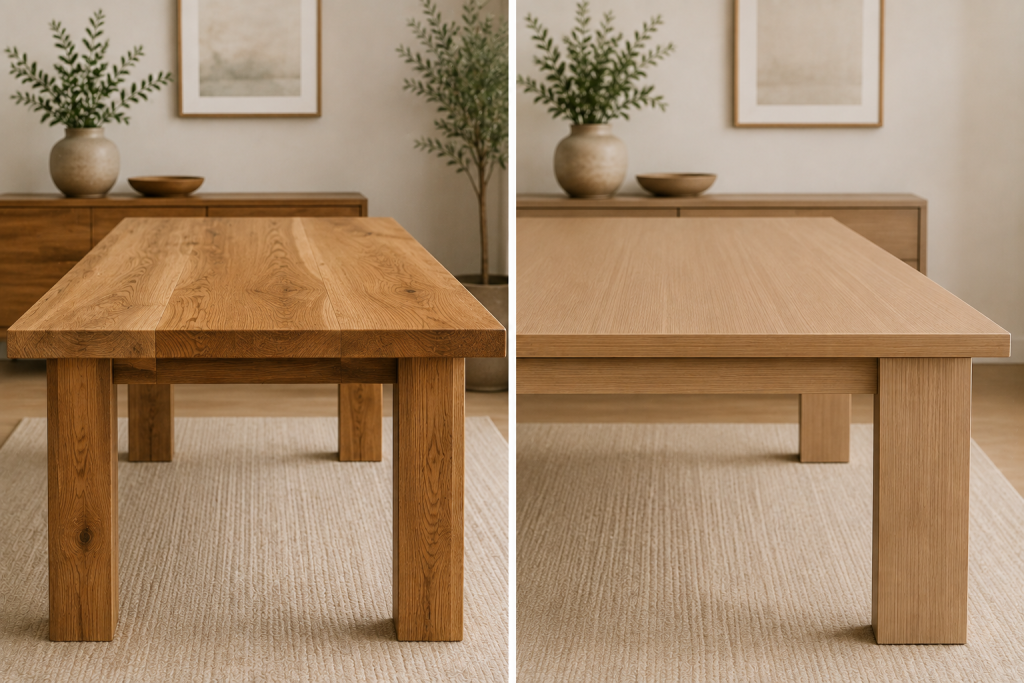
Dining tables provide one of the clearest examples of the differences between these materials.
A solid timber dining table celebrates natural grain and can develop a beautiful character over time.
It can become a major feature of a dining room and, when properly constructed and maintained, may remain in use for many years.
An engineered wood dining table can provide a cleaner, more uniform appearance and may offer a more accessible price point.
A veneered engineered table can also achieve the appearance of natural timber without requiring solid hardwood throughout its construction.
Your decision should consider how frequently the table will be used, your budget, the appearance you prefer and how much maintenance you’re comfortable with.
For beds, construction is particularly important because the frame needs to support substantial weight repeatedly.
Solid timber can be an excellent material for bed frames because of its strength and structural qualities when properly designed.
However, engineered materials can also be used successfully in bed construction.
Some beds combine solid timber structural components with engineered headboard or decorative panels.
Rather than focusing only on whether a bed is solid or engineered wood, examine the frame construction, support system, slats, centre supports, joints and hardware.
These elements can be just as important to the performance of the bed.
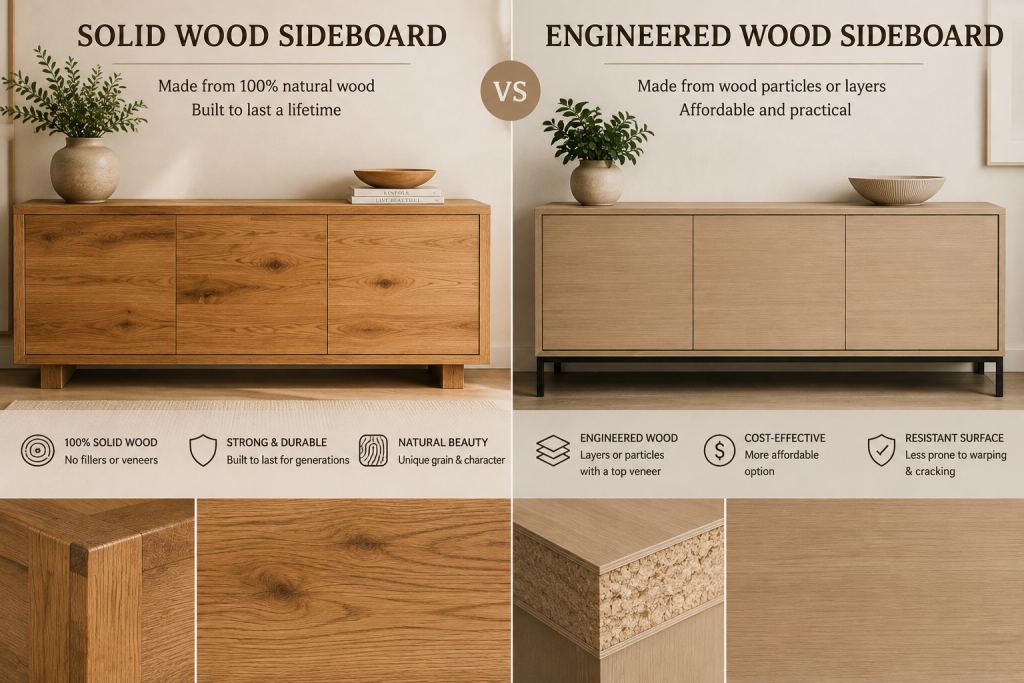
Sideboards are another category where both materials are commonly used.
Solid timber sideboards can showcase beautiful natural grain and provide a substantial furniture feel.
Engineered wood, meanwhile, is particularly useful for creating large, flat cabinet panels with consistent surfaces.
Many quality cabinets use a combination of materials.
For example, a sideboard might use solid timber for legs, framing or doors while incorporating veneered engineered panels elsewhere.
The important question is therefore not always “Is it 100% solid wood?”
A better question can be:
“Which materials have been used, where have they been used, and why?”
That gives you a much clearer understanding of the furniture’s construction.
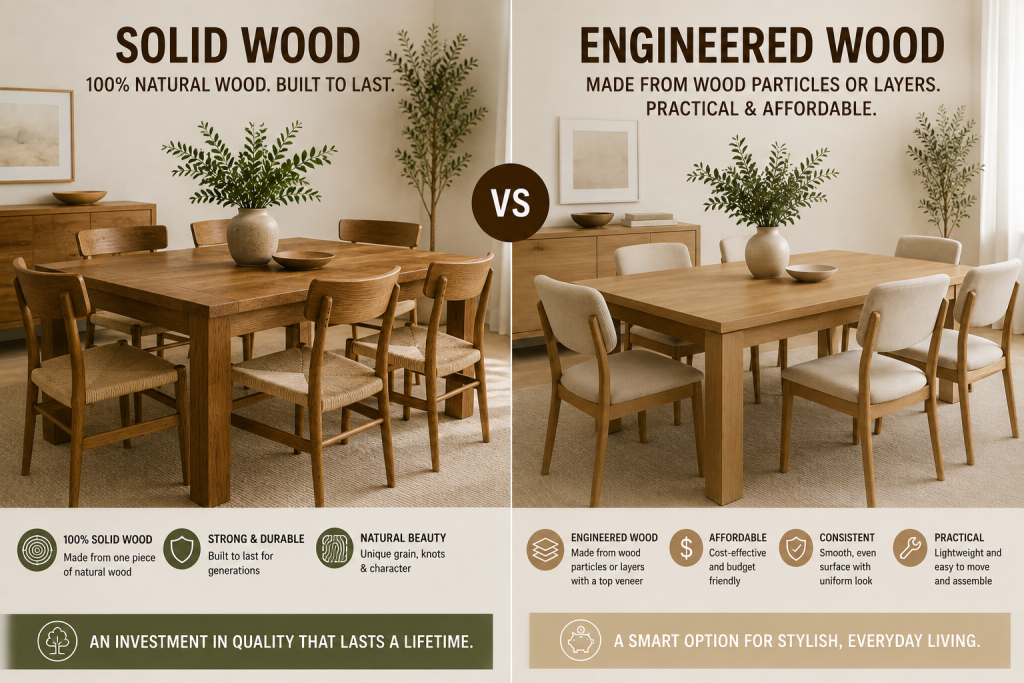
Dining chairs are subjected to repeated movement and concentrated loads, making their construction especially important.
Solid timber is widely used for chair frames because it can provide strong structural components while also allowing beautiful shaped details.
Engineered components such as moulded plywood can also be extremely useful in chair design, particularly for creating curved seats and backrests that would be difficult to achieve economically from thick pieces of solid timber.
A chair combining solid timber legs with a moulded plywood seat, for example, should not automatically be viewed as inferior.
Good furniture design uses materials according to their strengths.
Solid timber furniture will often cost more than comparable mass-produced engineered furniture.
Several factors contribute to this.
Natural timber needs to be sourced, dried, selected, cut, joined and finished. Individual pieces can also vary, meaning manufacturing may require more material selection and craftsmanship.
Engineered boards allow manufacturers to produce consistent panels efficiently and make better use of wood fibres and smaller pieces of timber.
However, price alone does not determine quality.
Premium plywood and natural veneers can be used in high-quality furniture, while poorly constructed solid wood furniture can still perform badly.
Look at the entire product rather than judging it from one material description.
Sustainability is more complicated than simply saying one material is always environmentally better than another.
Solid timber can be a renewable material when forests are responsibly managed, and furniture with a long usable life can reduce the need for frequent replacement.
Engineered wood can make efficient use of timber resources because smaller wood pieces, fibres and veneers can be turned into useful panels.
However, manufacturing processes, adhesives, transportation, material sourcing, product longevity and end-of-life disposal all contribute to environmental impact.
If sustainability matters to you, consider how the material was sourced and how long the furniture is likely to remain useful, rather than relying only on the words “solid wood” or “engineered wood”.
Sometimes—but not always.
Visible end grain, natural variations and certain joinery details may indicate solid timber.
However, modern veneers can look extremely convincing because natural wood veneer is, after all, real wood.
A furniture photograph alone may not tell you everything about construction.
Always read the product specifications.
Look for descriptions such as:
Solid Oak
Solid Ash
Solid Walnut
Oak Veneer
Walnut Veneer
MDF
Plywood
Particleboard
Solid Timber & Veneer
Clear material specifications help you understand exactly what you’re purchasing.
| Feature | Solid Wood | Engineered Wood |
|---|---|---|
| Construction | Natural timber pieces | Manufactured wood-based panels |
| Appearance | Natural variation and grain | Usually more consistent |
| Durability | Excellent when well constructed | Varies by material and construction |
| Repairability | Often sandable and refinishable | Usually more limited |
| Stability | Naturally expands and contracts | Certain types offer greater dimensional stability |
| Price | Often higher | Often more affordable |
| Weight | Can be substantial | Varies considerably |
| Surface | Natural timber throughout the component | May use veneer, laminate or another finish |
| Best For | Long-term pieces and natural character | Practical furniture, consistent finishes and budget-conscious applications |
There isn’t one answer for every home or every piece of furniture.
Choose solid wood when natural character, long-term repairability and the tactile qualities of genuine timber are priorities.
Choose engineered wood when consistency, stability, practicality or budget are more important.
And don’t overlook furniture that combines the two.
Some very well-designed furniture uses solid timber where structural strength and exposed detail matter, while using quality engineered materials for larger panels or curved components.
Ultimately, good furniture is about more than the material name on the product page.
Design, construction, joinery, finish, hardware, comfort and appropriate use all matter.
When purchasing furniture for your South African home, take the time to understand what you’re buying.
Read the specifications, consider how the furniture will be used and choose materials that suit your lifestyle rather than selecting something simply because one term sounds more premium than another.
A busy family dining table has different requirements from an occasional console. A child’s bedroom needs different considerations from a formal dining room. And furniture intended to remain in your home for many years deserves particular attention to construction and materials.
At Woodbuilt Furniture, we believe customers should be able to appreciate furniture not only for how it looks, but also for how it is made. Understanding the difference between solid wood and engineered wood makes it easier to choose furniture based on quality, function, appearance and value—and ultimately select pieces that feel right for your home.
 Optimized by Seraphinite Accelerator